One of the most common questions we get is: "why does my parcel cost more than my friend's, when both looked like small boxes?" The answer is almost always package category. Couriers price documents and non-documents very differently — here's the plain-English version, from Trueship International.
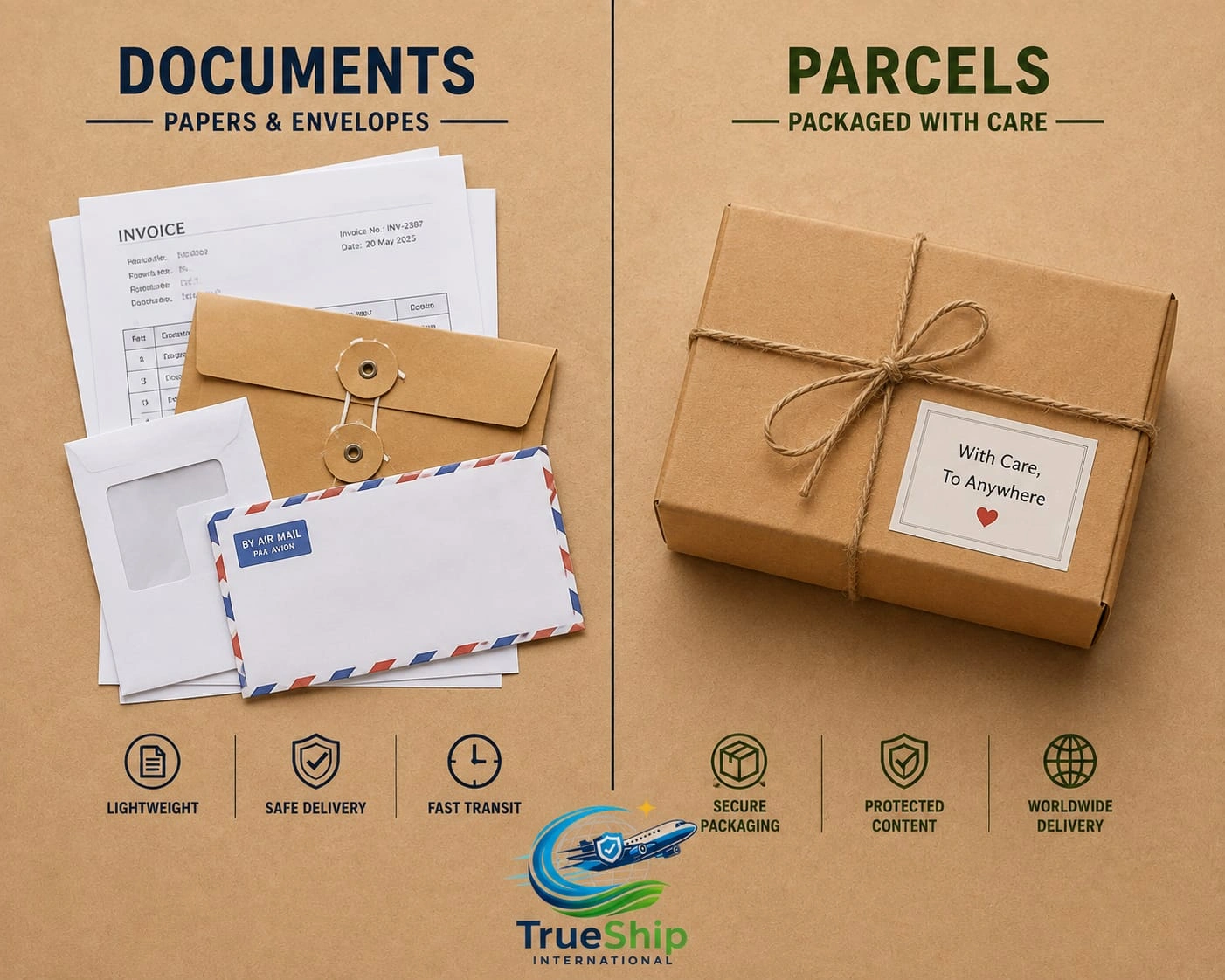
What Counts as a "Document" Shipment
- Printed papers with no commercial value — certificates, contracts, letters, admission papers.
- Generally weighs under 0.5 kg and has no resale value.
- Usually doesn't require a detailed customs invoice, since there's nothing being "sold."
What Counts as "Non-Document"
- Anything with physical, resalable value — clothes, electronics, gifts, samples, cosmetics.
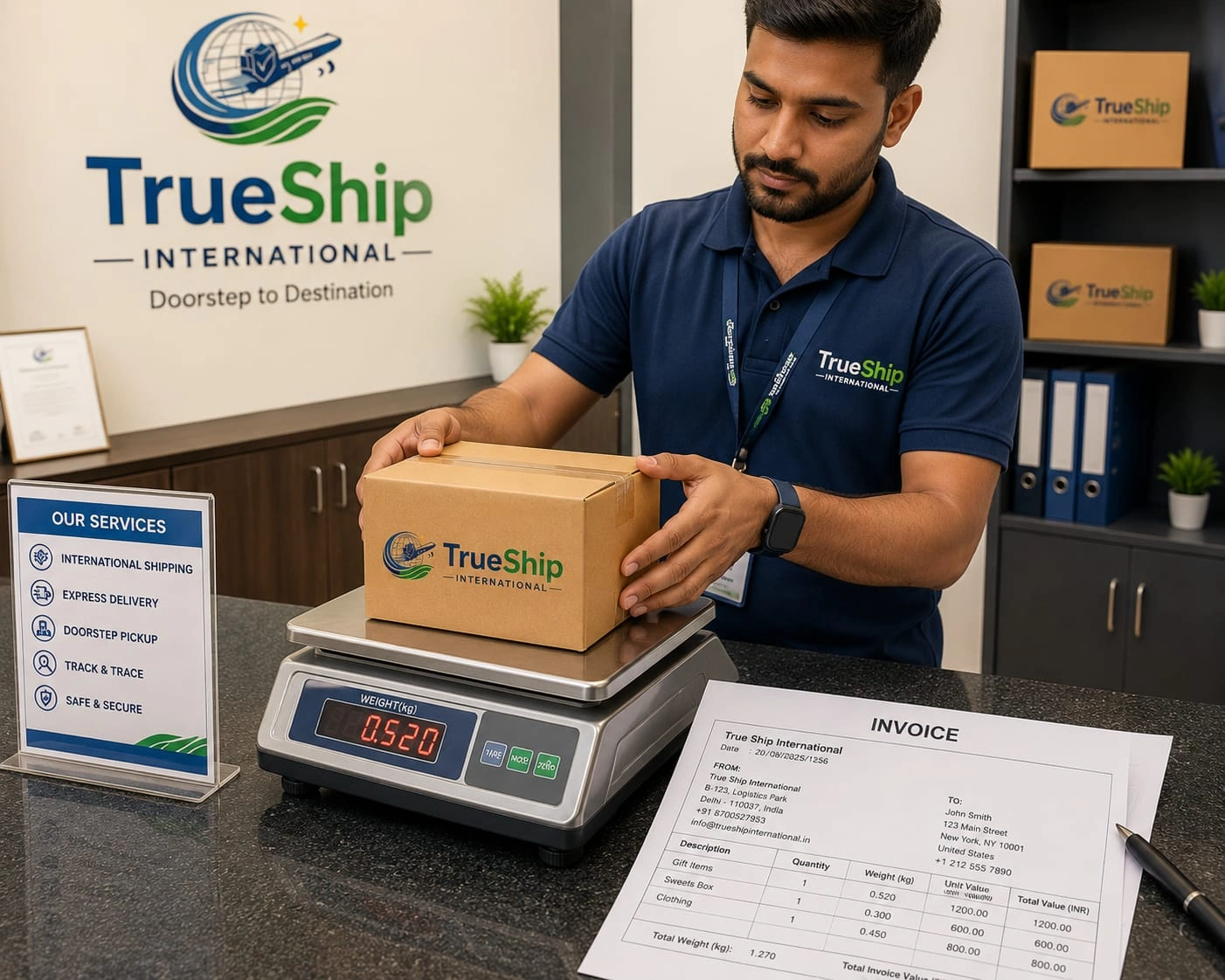
- Requires a proper invoice with item description, quantity, and declared value.
- Priced by actual or volumetric weight, whichever is higher.
Why the Rate Differs So Much
Document shipments are cheaper because they're low-risk and low-effort for customs — there's nothing to assess duty on. Non-document shipments involve valuation, potential duty, and more handling, so the rate reflects that extra processing.
| Factor | Documents | Non-Documents |
|---|---|---|
| Customs invoice needed | Rarely | Always |
| Pricing basis | Flat / weight slab | Actual vs volumetric weight |
| Duty risk | None | Possible |
Final Thoughts
Before booking, ask yourself: does this item have resale value? If yes, it's a non-document shipment and needs a proper invoice. Getting the category right the first time avoids re-quotes and delays. Trueship International will always tell you upfront which category — and rate — your shipment falls under.